
Book Builder
 An Exchange Alley game
● Live Markets
An Exchange Alley game
● Live Markets
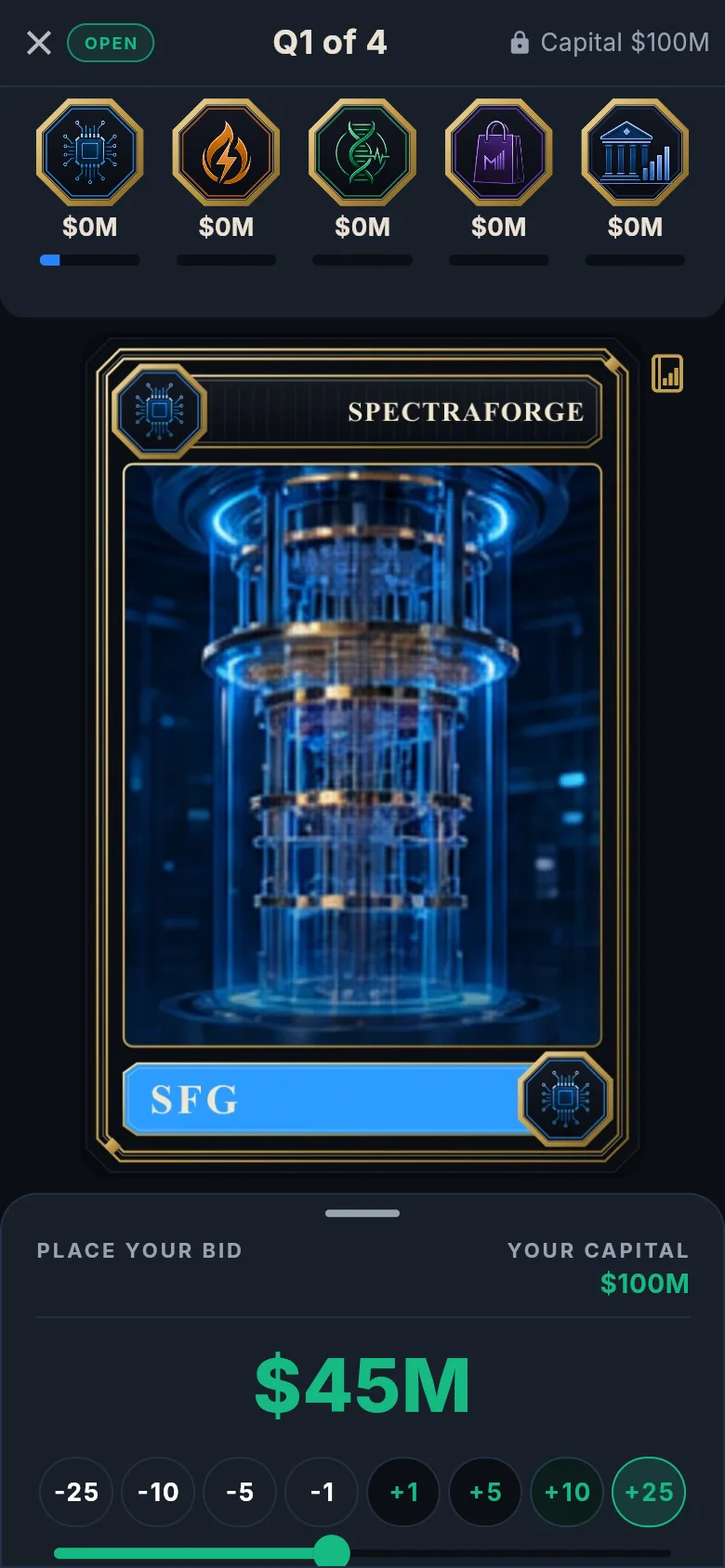
Build your book. Corner the sectors.
A sealed-bid auction. Everyone — including the seller — privately names a price for the stock on the block, and the highest sealed bid wins. Everyone can see what you own; nobody can see what you can still afford — and that gap is the whole game.
Float a stock to talk up its sector. When the round settles, only the top three sectors by volume pay out — back a sector that goes quiet and you're left holding air. Keep enough hidden cash to win the auctions that matter.
Book building is the real term for privately collecting bids to set a price — and here you're building your own book, too.
3–6 playersCompetitiveBluff & bankroll